
You can run clean campaigns with decent CTR and still get weak results.
Often, Ads Manager is not lying. The ads are doing their job: getting clicks from the right people.
The real problem is what happens after the click.
For startups, this hurts because you are buying expensive learning. If your post click flow leaks conversions, you will keep “optimizing ads” while the real issues stay hidden.
A fast way to locate the problem
Look at the pattern:
- If CTR is low, you likely have a targeting, creative, or offer problem.
- If CTR is fine but conversion rate is low, you likely have a landing page, trust, or tracking problem.
- If conversion rate is okay but CAC is too high, you likely have an economics or retention problem.
This post focuses on the second case: clicks happen, conversions do not.
Mistake 1: Your offer is “fine” but not sharp for paid traffic
Paid traffic is impatient. People clicked because something caught their attention, not because they already trust you.
If your page opens with generic lines like “All in one platform”, you are forcing visitors to guess why they should care.
Fix it:
- Write the first headline as a clear outcome for a clear audience.
- Add one reason to believe (proof, number, timeframe, mechanism).
- Push features lower on the page. Lead with value.
Startup example: Instead of “AI email marketing for teams”, try “Write and send 3 high-converting onboarding emails in 10 minutes”.
Mistake 2: The Ad promise and the landing page reality do not match

If your ad says “Free SEO audit in 60 seconds” but your page headline says “Welcome to PeakAuditCompass”, the brain sees mismatch, feels risk, and bounces.
KlientBoost shared a test where aligning ad and landing page messaging (“Fully Free for Life”) produced a 66% lift in conversion rate.
Fix it:
- Reuse the main ad headline as the landing page H1 for that ad group.
- Keep the same offer, same price, same core benefit.
- Build a few focused pages instead of sending everything to one general page.
Mistake 3: The page is slow on mobile
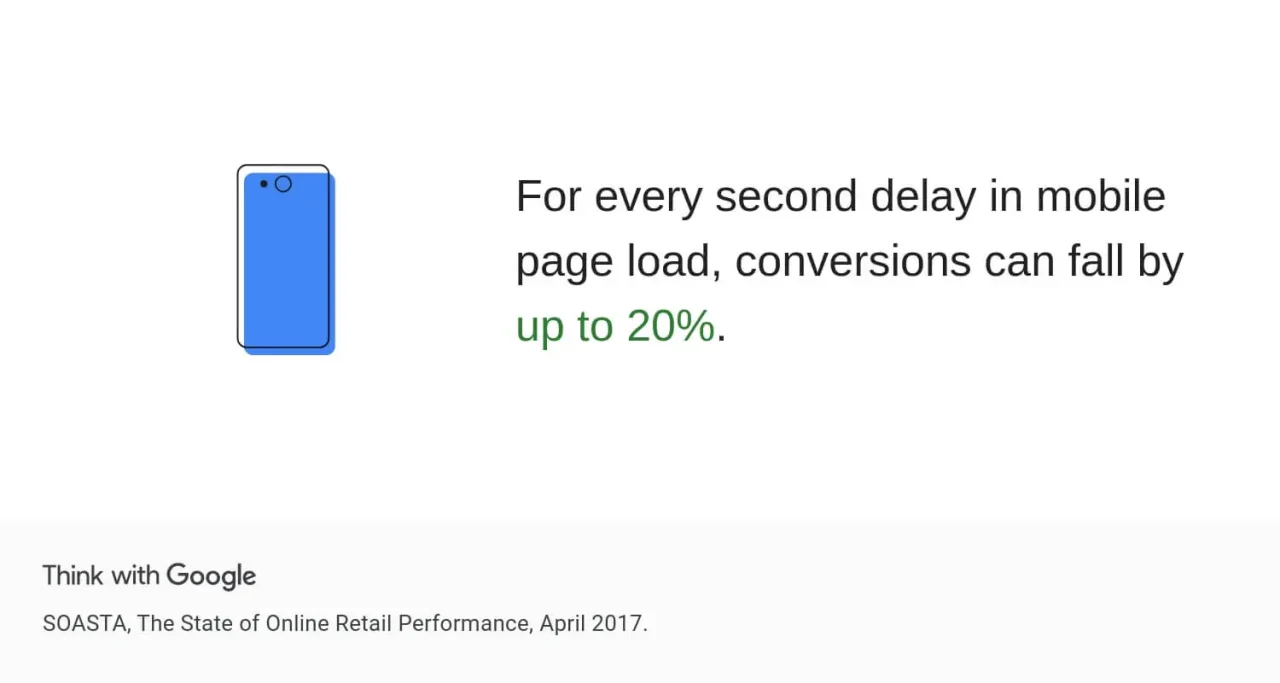
This is invisible in Ads Manager, but it can destroy the conversion rate.
Google has shared that for every 1-second delay in mobile page load, conversions can fall by up to 20%.
They also published benchmarks showing many mobile landing pages take more than 5 seconds to show above-the-fold content.
Fix speed first:
- Compress and resize images (especially the hero) correctly.
- Remove or delay non-essential scripts (chat widgets, heatmaps, extra trackers).
- Use caching and a CDN.
- Reduce heavy fonts and third-party embeds.
WordPress-specific speed traps
On WordPress, speed problems are often self-inflicted:
- Too many plugins are adding scripts site-wide.
- Page builders are loading big CSS and JS on single-purpose pages.
- Cookie banners and popups are blocking interaction early.
For paid traffic, treat WordPress landing pages like performance-sensitive product screens.
Mistake 4: Mobile UX breaks the first 10 seconds
Most paid traffic is mobile. Even in B2B, mobile clicks can be high.
Common mobile conversion killers:
- Sticky headers that push the CTA below the fold.
- Hero sections that look nice but say nothing.
- Forms that are painful on a phone.
- Widgets covering the CTA.
Fix it:
- Make the primary CTA visible without scrolling.
- Use one main CTA, not three.
- Cut form fields hard (email first is often enough).
- Test on a real phone, not only in Chrome dev tools.
Mistake 5: You ask for commitment before you earn trust
Ads can create interest, but trust is built on the page.
If you ask for a credit card, a demo booking, or a long form, the page must do trust work fast.
High-impact trust signals:
- Proof (logos, testimonials, screenshots, reviews).
- Clear policies (refund, privacy, terms) in the footer.
- Risk reversal (free trial, money back, cancel anytime).
- Clear “what happens next” after the CTA.
If you sell services, add process clarity. Show the steps so the buyer feels safe.
Mistake 6: Your form or checkout adds unnecessary friction
Sometimes the drop happens at the final step, not on the landing page.
Baymard tracks the global average cart abandonment rate around 70%.
They also report that 18% of shoppers have abandoned an order because the checkout was too long or complicated.
Even if you are not in e-commerce, the idea is the same: every extra step can hurt.
Fix it:
- Remove fields until it feels almost uncomfortable.
- Add clear inline error messages.
- Show total cost early, not at the end.
- Avoid forcing account creation before purchase.
Mistake 7: Your pricing page causes decision paralysis
Startups often lose conversions because pricing feels confusing, not expensive.
Signals of paralysis:
- Too many plans with unclear differences.
- Missing “best for” guidance.
- Important limits are hidden in tooltips or footnotes.
Fix it:
- Add “Best for” and one sentence per plan.
- Make one recommended plan obvious.
- If your ad sells one main offer, send traffic to a page with one clear path, not a complex grid.
Mistake 8: You optimize the wrong conversion event
This is a quiet killer.
If you optimize for a “Lead” event that fires on form start, or your “Purchase” event fires multiple times, Ads Manager can look great while the business feels broken.
Check:
- The event fires only once per real conversion.
- The event fires after the real action, not before.
- Values are passed correctly (for purchases and subscriptions).
- Consent tools are not blocking tracking for most users.
Mistake 9: You trust attribution more than reality
Platform attribution is helpful, but it is not the same as incremental impact.
Some conversions would happen anyway, especially if you already have brand demand or strong SEO.
Meta’s Conversion Lift methodology is designed to measure incremental effect by comparing people who saw ads vs a holdout group who did not.
Practical steps without complex studies:
- Watch blended metrics (overall leads, overall sales) with platform metrics.
- Run simple time-based tests (on vs off) when volume allows.
- Do not scale only because ROAS looks good for a few days.
Mistake 10: Lead quality is poor, and Ads Manager cannot see it
Lead volume can go up while revenue goes down.
Fix lead quality:
- Add one qualifying question that filters low intent.
- Track lead to sale in your CRM.
- Optimize for downstream metrics, not only CPL.
Also, follow-up speed matters. Many teams lose leads because they reply too late.
Mistake 11: Creative earns clicks, but not buyers
If creative is vague or too top of funnel, you can attract curiosity clicks that never convert.
Meta’s own guidance for conversion testing focuses on consistent testing and iteration.
A practical startup pattern:
- Test 3 angles (pain, outcome, comparison).
- Test 2 to 3 formats (static, short video, UGC style).
- Refresh winners before fatigue, and keep a small testing budget always on.
If you want a simple overview of creative testing concepts, Shopify’s guide is also a good starting point.
Mistake 12: The funnel ends right after the conversion
Even when someone converts, you can still lose the sale:
- The thank you page is empty.
- The first email is slow, long, or unclear.
- The trial starts, but there is no fast path to an “aha moment”.
Fix it:
- Use the thank you page to guide the next action.
- Send one short welcome email focused on one action.
- Build one fast path to value (template, checklist, prefilled setup).
A 60 minute conversion audit for busy founders
Do this before you spend more on ads:
- Click your own ad on a real phone and record the screen.
- Ask “Does the first headline confirm the ad promise?” If no, fix message match first.
- Run a speed check and also test on mobile data.
- Find the biggest drop off step in your funnel (view, click, start, submit, purchase).
- Ship one change per week and measure.
If you want inspiration for how focused landing pages can lift results, Unbounce shares case studies called 10 landing page optimization case studies and examples to inspire you.
Conclusion
Paid ads are not only an ads problem.
Ads Manager shows what happens inside the platform. Conversions are decided after the click, on your page, in your offer, in trust signals, and in follow up.
If you are a startup, this is good news.
You do not need a bigger budget to improve results. You need fewer leaks after the click.
Fix the invisible mistakes first, then scale what already works.