
In the past, when people heard the word “agency”, they imagined an office full of staff. Designers on one side, account managers on another, strategy people in meeting rooms, and a founder running between calls.
Today there is a different picture. One person, a laptop, a good tech stack, and a small set of clear services. From the outside it still looks like a real agency. The website shows packages, case studies, and a strong brand. But inside there is no staff list. Just one founder and a smart system.
These are the “one-person agencies”. They are not only a branding trick. They are a serious way to build a high-profit, low-headache business if you design them correctly.
This blog post explains why this model is growing, how people run agencies without staff, what tools replace a team, and how you can start your own one-person agency without burning out.
What Is a One-Person Agency

A one-person agency is a solo business that delivers agency-style results using productized offers, a repeatable process, and systems (templates, automation, AI, and sometimes contractors). Unlike a classic freelancer, it sells a clear outcome and a delivery system, not random hours.
A freelancer usually:
- Sells time
- Changes scope from project to project
- Writes many custom proposals
- Works under other agencies or clients as a flexible resource
A one-person agency behaves more like a firm:
- Clear offers and productized packages
- A repeatable process for each service
- An agency-style brand, not a personal “portfolio” look
- Systems, templates, and automation that do the work of junior roles
Clients do not feel they are hiring “just a freelancer”. They feel they are hiring a small, focused agency that knows one problem very well and solves it again and again.
On paper there is no staff. In practice there is a hidden team made of:
- Automation tools
- AI assistants
- A small pool of contractors when truly needed
The important change is mindset. You stop thinking “How do I sell my time?” and start thinking “How do I build a system that delivers a clear result?”
Why One-Person Agencies Are Growing Now
Several trends make this model realistic today.
First, freelancing itself is exploding. In the United States, an estimated 76.4 million people were freelancing in 2024, and this number is still rising.
Upwork reports that skilled freelancers generated around 1.5 trillion dollars in earnings in 2024, and a large share of CEOs plan to increase freelance hiring. Their freelancing stats report explains how independent professionals are becoming a core part of the talent mix.
Second, tools are much more powerful and accessible. You can combine AI, automation, and “all-in-one” platforms to handle tasks that used to need a team. For example, Sellful offers an AI-driven platform that replaces many separate tools: content writing, website builder, CRM, invoicing, email, SMS marketing, social media scheduling, and more. A recent feature on Sellful shows how agencies can run everything from one interface.
Third, AI gives solo founders serious leverage. You can use large language models for research, content drafts, code, campaign ideas, and customer support replies. A solo marketer can now do the work that used to need several junior staff if they build strong AI workflows. Unkoa has a full blueprint of how one-person agencies use AI to multiply output.
Finally, many professionals simply do not want big teams. They want high income, flexibility, and control over their time, without managing ten employees. A one-person agency gives that option.
Real Examples of One-Person Agencies
This is not just a theory from Twitter threads. There are real one-person agencies working at impressive scale.
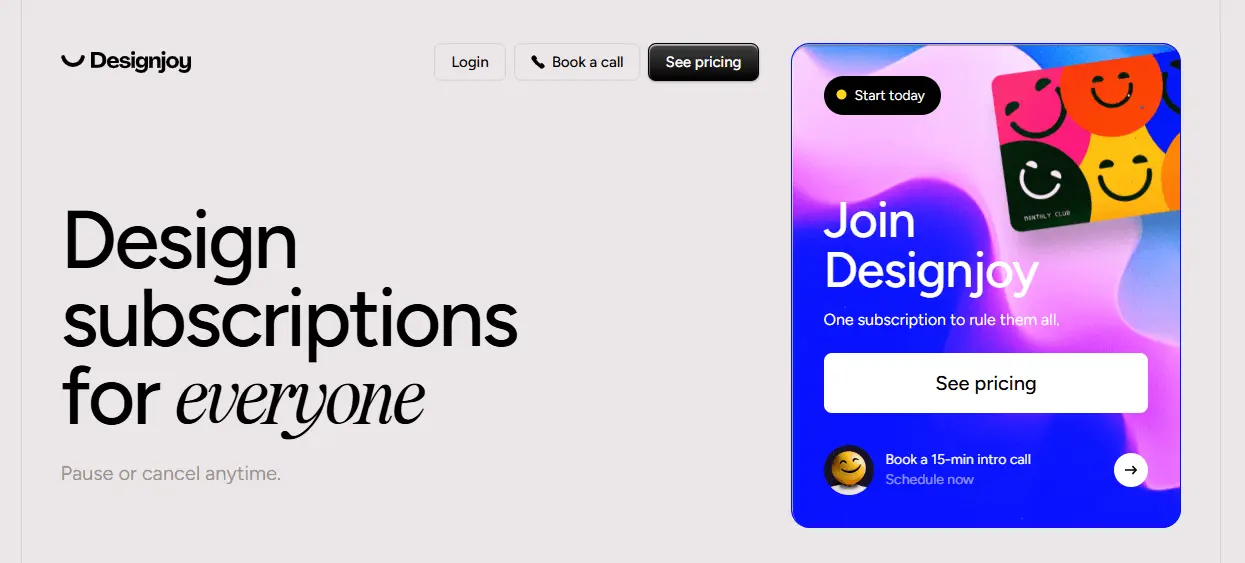
One famous example is Designjoy, a design subscription service. Clients pay a flat monthly fee for “unlimited” design requests. There is a queue, clear rules, and fast turnaround. The founder runs it as a solo operator using systems and strict boundaries.
Writers have broken down how Designjoy passed 100k dollars per month in revenue while serving dozens of clients. A Medium breakdown of Designjoy explains the model, pricing, and client management in detail.
You also see this model in AI-powered marketing agencies.
For example, The Logo Creative shares the story of Alex Rivera, who runs a one-person AI-based marketing agency. Most content, reporting, and routine tasks are handled by AI systems, while the human focuses on strategy and client relationships. Their article shows how an AI-run solo agency actually works day-to-day.
There are also case studies of single founders handling hundreds or even more than a thousand client requests per year by automating repeatable work. One Medium case study describes a solo founder who automated 80 percent of tasks for over 1,200 client requests.
All these examples prove the same idea. With the right structure, one person can deliver agency-level results.
How One-Person Agencies Replace Staff With Systems
If you remove staff, something else must handle client work.
Traditional agencies lean on people. A one-person agency leans on systems. Here are the usual components.
Productized services
Instead of custom proposals for every lead, one-person agencies offer a small set of fixed packages. For example:
- “Unlimited design requests, one brand at a time, two business day turnaround”
- “Four SEO-optimized blog posts per month for B2B SaaS”
- “Analytics and tracking setup in four weeks”
This reduces back-and-forth, disables endless scope creep, and makes capacity planning easier.
Self-service intake
Clients do not send messy emails. They submit requests through forms, boards, or a portal. Each request follows a template: summary, goal, assets, examples, and deadline.
Tools like Trello, Notion, ClickUp, Basecamp, or custom portals act as the “account manager”.
Queues and clear limits
Most subscription agencies work on one active request per client at a time. That simple rule stops overloaded queues. “Unlimited” refers to how many tasks clients can add, not how many are active at once.
With this rule, a solo founder can predict daily work and avoid chaos.
Automation for admin work
Automation tools are the invisible operations assistant. Typical automations include:
- When a client pays, create a project board and welcome email
- When a task is marked “done”, move it to an archive and send a summary email
- When a request is created, log it in a spreadsheet and a CRM
- When a monthly cycle is close to renewal, send a reminder and report
Tools like Zapier, Make, n8n, and native integrations connect payment tools, CRMs, project boards, and email services. Guides for AI automation agencies show real workflows that one-person shops can reuse.
Templates and libraries
Templates are the “junior team”.
A solo founder builds libraries for:
- Landing page layouts
- Email sequences
- Report formats
- Ad frameworks
- Proposal and contract documents
Instead of starting from zero each time, they customize a template. Quality goes up and delivery time goes down.
Business Models That Fit the One-Person Agency
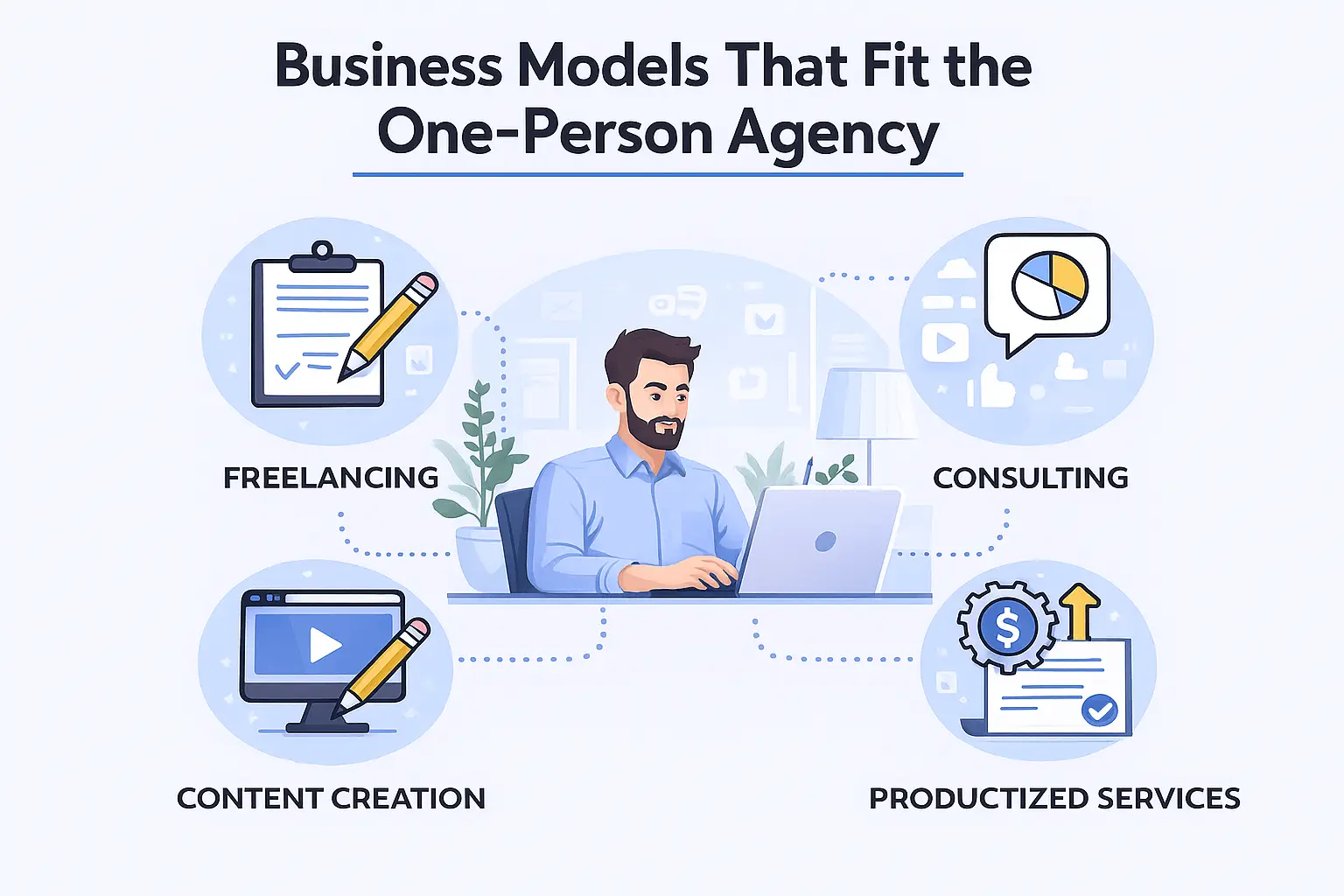
Not every service model works well as a solo operator. Some are much easier to manage.
Subscription and retainer
This is the most common structure. Clients pay a flat monthly fee for a defined scope. Some examples:
- Design subscriptions
- Content and LinkedIn ghostwriting bundles
- SEO and content updates
- Ongoing analytics and reporting
The benefit is recurring revenue and easier planning. The founder can cap the number of active subscriptions to avoid overload.
Short, intense sprints
Another path is fixed, time-limited sprints. For example:
- “90-day content system setup”
- “Positioning and messaging sprint”
- “Analytics and tracking implementation sprint”
Here, the founder focuses on a few clients at a time, goes deep, delivers a clear outcome, and then moves on. This works very well if you like project cycles instead of ongoing support.
Strategy plus light implementation
Some one-person agencies focus mainly on strategy and system design, plus a small set of implementation tasks.
For example, a marketing strategist might:
- Run interviews and research
- Design a content strategy
- Build a content calendar
- Set up basic workflows and dashboards
Then the client’s internal team or other vendors handle ongoing execution. This keeps your workload lighter and your value high.
The Tech Stack Behind a One-Person Agency
The tools you choose decide how lean your operation can be.
Typical parts of the stack include:
- A website and landing pages on WordPress, Webflow, Framer, or similar
- A project and client portal (Notion, Trello, ClickUp, or custom)
- A communication layer (email, Slack, Loom videos, simple client chat)
- Automation tools (Zapier, Make, webhooks)
- AI tools (ChatGPT, Claude, image generators, and niche AI SaaS for your field)
- Billing (Stripe, Paddle, PayPal, or agency platforms with built-in billing)
The main idea is to reduce tool hopping. All-in-one systems are now marketed exactly for this use case. Platforms like Sellful aim to replace many separate subscriptions with one unified control panel.
How Solo Agencies Win Clients Without a Sales Team
You still need a pipeline, even if you are only one person. Without a sales department, most solo agency owners rely on three main channels.
Narrow positioning
They pick one problem and one type of client. For example:
- “Conversion-focused landing pages for B2B SaaS”
- “LinkedIn content systems for founders”
- “Analytics and measurement for ecommerce brands”
This makes it much easier for people to remember and refer you. When that specific problem appears, your name comes up.
Content and simple case studies
They publish helpful content that matches their niche. Small case studies, breakdowns, and “behind the scenes” posts are especially powerful.
A short write-up like “How I helped a founder clean their analytics in three weeks” is more convincing than a generic article like “Why analytics matters”.
Networking and communities
Many one-person agencies find their first clients inside:
- Slack groups
- Indie maker communities
- Niche forums
- LinkedIn connections
You do not need spammy outreach. Honest conversations and helpful answers inside the right communities attract the first wave of clients.
The Risks: Burnout and Growth Ceilings
The one-person agency model has clear risks.
The biggest one is burnout. You wear many hats at the same time. You are the strategist, implementer, account manager, and salesperson. If you overpromise, say yes to every client, or add too many services, you will reach your limit fast.
Some founders also face a hard ceiling on growth. There are only so many deep work hours in a week. Even with AI, you cannot multiply yourself without changing the model. Linked case studies and personal stories often show the same pattern: it is easy to start, hard to scale without changing scope or adding support. One founder who built an AI automation agency explains why this model can be hard to scale long term.
Another risk is client concentration. If a few large clients make up most of your income, one churn can cut revenue in half.
Finally, you must plan for time off. If you get sick or want a real holiday, there is no team to keep work moving unless you prepare systems or contractors.
How Successful One-Person Agencies Protect Their Time
The healthiest solo agencies share a few habits.
- Tight scope
Every offer has a clear scope and clear exclusions. Anything outside that scope becomes a separate project or a polite “no”. - Client caps
They decide the maximum number of active clients or subscriptions they can handle at once and respect that limit. When full, they open a waitlist or raise prices. - Async first
They prefer written updates and recorded videos over constant meetings. This protects focus time and reduces context switching. - Batching
They batch similar tasks. For example, all design work on two days per week, all reporting on one day, sales and admin on another. This makes work smoother and easier on the brain.
These simple rules make the model sustainable and keep clients happy.
How to Start Your Own One-Person Agency
Here is a simple path if you want to try this.
Step 1: Choose one clear outcome
Pick a result, not a broad skill. For example:
- “Turn confusing SaaS products into simple, high-converting landing pages”
- “Build content systems that give founders weekly LinkedIn posts without stress”
- “Set up accurate tracking and dashboards so ecommerce brands know their key numbers”
The clearer the outcome, the easier it is to sell.
Step 2: Turn the outcome into one main offer
Write one flagship offer around that outcome. Define:
- Who it is for
- What is included
- What is not included
- Expected timeline
- Price and payment terms
- How communication will work
You can add more offers later. Start with one strong, simple package.
Step 3: Design your delivery workflow
Before you promote anything, map the full journey from “lead signs up” to “client gets result”. Decide:
- Which tools you will use
- How onboarding works
- How clients send requests
- How often you send updates
- Where you store assets and notes
- Which parts you can template or automate
Articles written for solo creatives can help you structure this. A guide on starting an “agency of one” walks through operations planning and tooling.
Step 4: Build a simple public presence
You do not need a complex site. A clean landing page with:
- A headline that explains your outcome
- A short story about you and your approach
- One main offer with clear details
- One call to action (book a call, join a waitlist, or apply)
That is enough to start, especially if you already have a network.
Step 5: Talk to people, not algorithms
Your first clients will likely come from:
- Past clients or employers
- Friends and peers in related fields
- People in your online communities
Send personal messages, not mass emails. Explain the problem you solve and the result you can create. Offer a simple next step, like a short call or a quick audit.
When to Stop Being a One-Person Agency
At some point you may reach your natural capacity. That is normal. The question then is simple: do you want to stay solo and raise prices, or slowly add help?
Good signs that it is time to add support are:
- Consistent waitlists
- Repeatedly turning down good clients
- A clear list of tasks that do not need your personal touch
- Stable revenue that can cover contractor costs
You do not need to jump to a big team. You can start with a virtual assistant, a part-time designer, or a specialist contractor while keeping the overall feel of a lean, focused solo-led agency.
Conclusion: A Small Structure With Serious Power
The rise of one-person agencies is not a small internet fad. It is a logical result of three forces coming together: the growth of freelancing, the power of automation and AI, and a cultural desire for flexible, independent work.
With a clear offer, strong systems, and the right tools, one person can deliver what looked like “agency-level” work a few years ago. Real case studies show solo founders earning healthy income, serving good clients, and keeping control over their schedule without hiring big teams.
This path is still work. You need discipline, boundaries, and respect for your own time. But if you like the idea of running a lean, focused business that feels bigger than just “freelancing”, a one-person agency is a model worth taking seriously.
Start by choosing one outcome, designing a simple offer, and building a delivery system you can run without chaos. Once that engine works for a few clients, you can always scale, niche further, or add support. The hardest part is the first version. After that, improvements are just iterations on a system that already works.
FAQ
Is a one person agency just freelancing?
Not exactly. A freelancer often sells time and custom work. A one person agency sells a clear outcome using a repeatable system: productized offers, templates, and a defined delivery process.
How many clients can a one person agency handle?
In most cases, it depends on your offer and how “hands-on” the work is. Many solo operators stay stable with 3–8 active clients by using client caps, a queue system, and async communication.
What’s the best pricing model for solo agencies?
If you want predictability, retainers or subscriptions usually work best. If projects vary a lot, fixed-price packages are safer than hourly because they force scope control and a clear delivery checklist.
What tools do I need to replace staff?
You mainly need tools for intake, delivery tracking, communication, and templates. A simple stack is: a form + CRM, a Kanban board (or client portal), a doc template system, and automation for follow-ups and reporting.
How do “unlimited requests” agencies actually work?
They are not truly unlimited at the same time. The common rule is one active request at a time (or one per client), with everything else sitting in a queue. That’s how one person can keep it manageable.
How do solo agencies get clients without a sales team?
Most win clients through one of these: niche content (SEO), referrals, partnerships, and direct outreach with a strong offer. The key is having a clear package and proof (case studies, results, examples) so the decision is easy.
How do I avoid burnout as a solo operator?
Use client caps, set response windows, and keep work async where possible. Productize your offer, reuse templates, and avoid “always available” communication. If you feel overloaded, raise prices or reduce scope, not hours.
When should I stop being a one person agency and add help?
When delivery quality starts dropping, deadlines slip, or admin work eats your focus every week. A common next step is adding part-time contractors for repeatable tasks, while you keep strategy, sales, and client communication.