
SEO in 2026 will feel less like “optimize a page” and more like “build a brand Google can trust.” The biggest change is not a single trick or new ranking factor. It’s that Google is getting better at deciding what your site is allowed to rank for, and AI search is changing how often users click. If you want stable growth, you need depth, clear proof of expertise, and content that earns attention even when clicks drop.
Below are 9 predictions, ordered from most important to least important (still worth knowing).
1) Topical authority becomes the main gatekeeper for rankings
In 2026, topical authority won’t be a nice-to-have. It will decide whether you even qualify to rank for many keywords.
I keep seeing the same pattern: sites that publish across too many unrelated topics get hit, while focused sites keep winning. This lines up with Google’s own messaging around “helpful, people-first content” and core update recoveries: it’s not about tweaking one page, it’s about the overall quality and focus of the site. Google’s guidance on core updates basically says “don’t chase the algorithm, improve the site.”
What changed in practice:
- Google is much stricter about “your lane.”
- If your site has mixed intent (news + reviews + random how-to + coupon pages), Google seems more willing to demote the whole domain.
- The winners usually look boring: tight niche, consistent audience, consistent content type, consistent author credibility.
What I would do now:
- Build a simple topic map (not a fancy spreadsheet) with:
- One core niche
- 5–10 subtopics
- 20–50 supporting page ideas
- Kill or noindex content that doesn’t fit the niche (or move it to another project/domain if you really need it).
- Make every new post support an existing cluster. If it can’t, it’s probably a distraction.
2) AI summaries reduce clicks, so SEO success shifts from traffic to outcomes
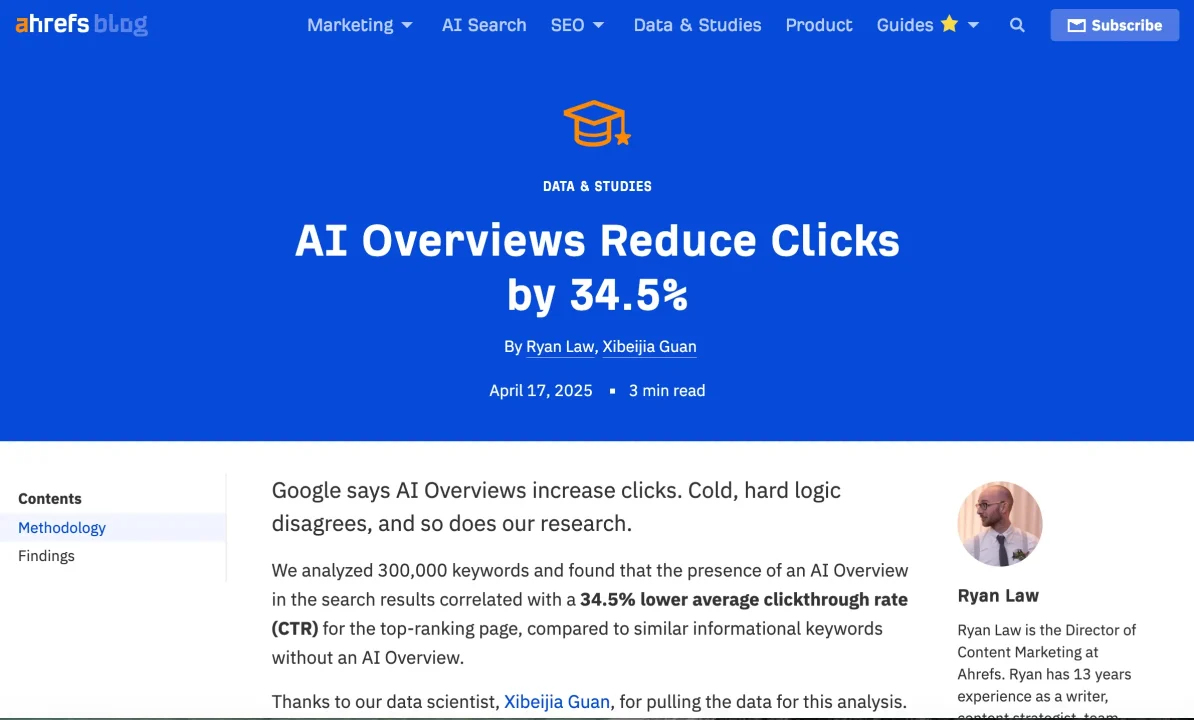
A painful truth: in 2026, you can do everything right and still get fewer clicks, because users get answers inside the SERP.
A Pew Research analysis of real browsing behavior found that when an AI summary appeared, users clicked a traditional result in 8% of visits, versus 15% when no AI summary appeared. Users clicked a link inside the AI summary only 1% of the time.
This is why many publishers are angry. Reporting like this piece from The Guardian highlights how AI summaries can reduce visibility and clicks for publishers.
What this means:
- Rankings still matter, but they don’t guarantee traffic like before.
- Informational keywords are the most at risk (definitions, simple how-tos, comparisons).
- Branded search, email lists, and direct traffic become more valuable.
What I would do now:
- Track SEO value with metrics that survive AI summaries:
- Branded search growth
- Newsletter signups from SEO landings
- Demo/contact conversions
- Assisted conversions (SEO touchpoints in GA4, not just last click)
- Build content that AI can’t fully satisfy in one block:
- Original data
- Unique frameworks
- Screenshots from your own experiments
- Templates, checklists, calculators, mini tools
- Create a reason to click in your titles and meta descriptions:
- “With examples”
- “Template”
- “Checklist”
- “Benchmarks”
- “Step-by-step”
3) User signals matter more, and systems like NavBoost keep getting attention
Google has always used user behavior indirectly, but 2026 feels like the era where “did users like this result?” becomes a bigger filter.
NavBoost is discussed a lot because it came up in public testimony around Google’s systems, and many SEO analyses describe it as using aggregated interaction data over time to adjust results.
Even if you ignore the name NavBoost, the direction is obvious: Google wants results that satisfy the query fast, with less pogo-sticking.
What this means:
- If your snippet wins the click but your page disappoints, you’re creating a ranking problem for yourself.
- UX, clarity, and query match matter more than ever.
- Engagement isn’t just time on page. It’s whether the page solves the task.
What I would do now:
- Rewrite intros to match intent faster:
- First 2–3 sentences should confirm the problem and promise the solution
- Put the answer early, then go deeper (don’t hide it after 800 words).
- Improve task completion UX:
- Jump links
- Short sections
- Clear steps
- Fewer distractions above the fold
4) Video continues to eat search demand (and YouTube keeps winning visibility)
You don’t need to become a full-time YouTuber, but in 2026, ignoring video is like ignoring mobile in 2016.
Google has a long history of heavily featuring YouTube in video SERP features. For example, this Wall Street Journal analysis discusses how Google often steers users toward YouTube over rivals.
Also, in AI-summary-era SERPs, YouTube often becomes an easy citation and safe result because video can be a strong proof format.
What I would do now (simple, not complicated):
- Pick 10 keywords you already rank for (positions 4–20).
- Make 10 short videos (2–6 minutes) answering those keywords.
- Reuse the video content:
- Embed it in your article (optional)
- Turn the transcript into a refreshed post
- Cut clips into shorts for distribution
5) Backlinks stay critical, but earning them changes
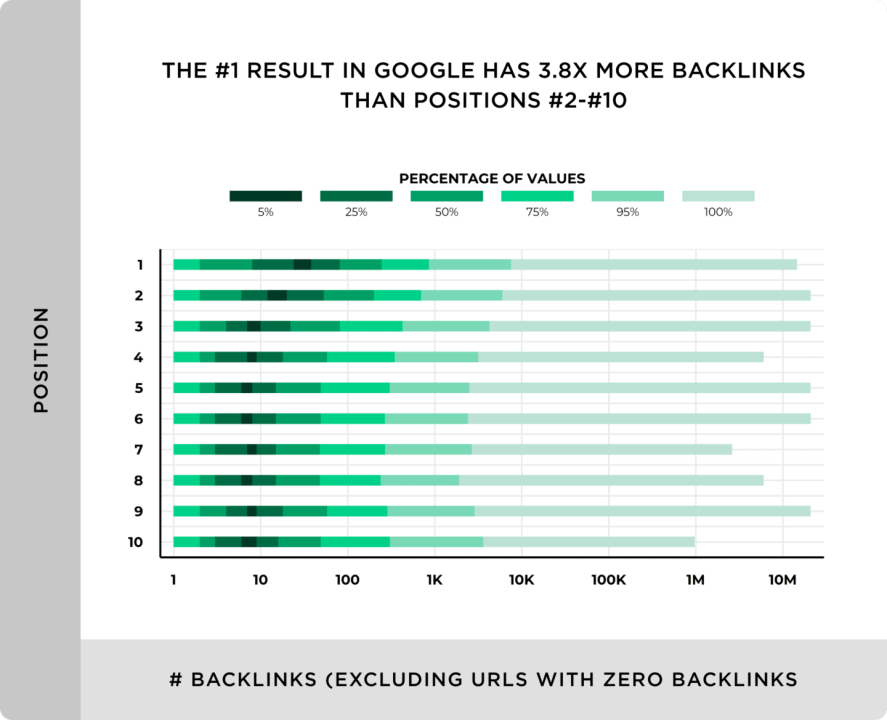
Every few months, someone claims backlinks are dead. In 2026, that’s still wrong.
What changes is that backlinks alone won’t save weak content, and you’ll need more credible link sources to compete. Also, if AI summaries reduce traffic for new sites, it becomes harder to get natural links through discovery. That makes digital PR more important.
What I would do now:
- Prioritize links that create trust, not just PageRank:
- Industry publications
- Niche communities with editorial control
- Real podcasts and interviews
- Research roundups
- Build linkable assets that don’t depend on opinions:
- Original data study
- Benchmark report
- Free calculator
- Curated database
- Do fewer guest posts, but higher quality:
- Relevant site
- Real audience
- Strong author bio
- One great link to a pillar page
6) Confirmed Google updates look quieter, but changes are constant
People say “Google updates are quieter now.” That can be true if you only count what Google officially confirms.
What this means:
- Don’t wait for an announcement to diagnose a ranking drop.
- You need your own monitoring habit.
What I would do now:
- Weekly checks (lightweight):
- Top 20 pages: clicks, impressions, avg position
- Top 20 queries: movement up/down
- Index coverage + manual actions
- When traffic drops, compare:
- Did one cluster drop or the whole site?
- Did informational content drop more than commercial?
- Did one template type drop (tag pages, category pages, programmatic pages)?
7) Reddit stays strong, but it’s not a safe foundation
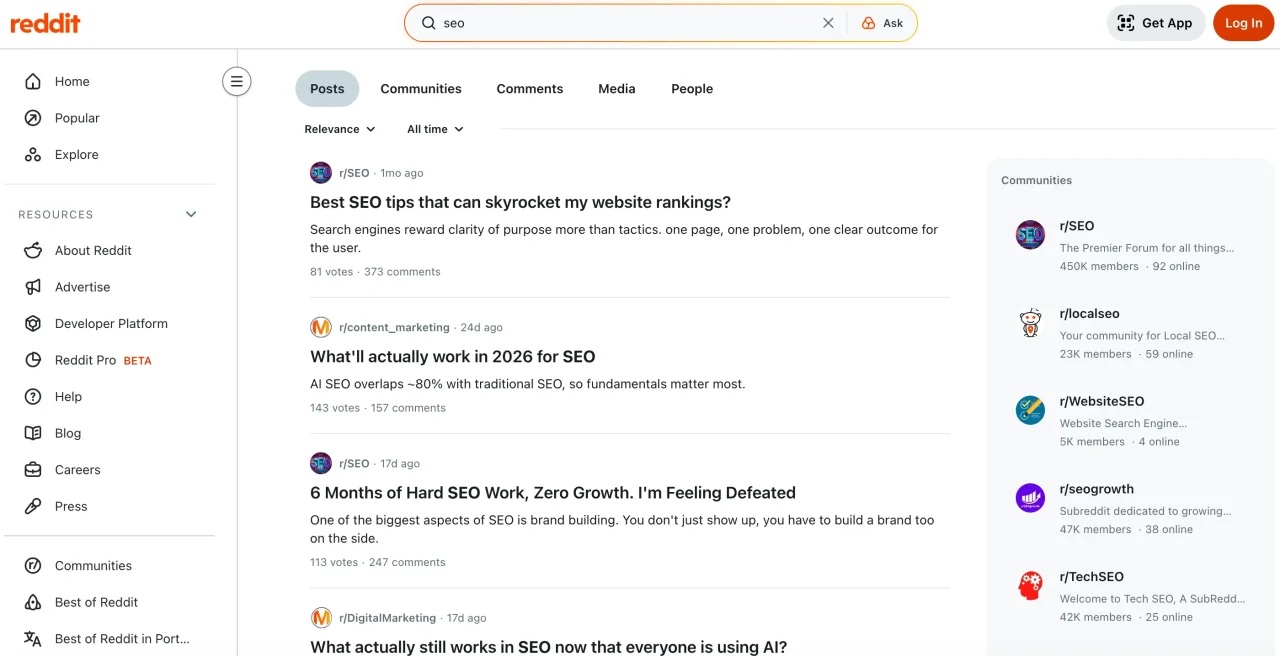
In 2026, Reddit will likely keep ranking well for many “experience” queries, especially when users want real opinions.
But building your whole strategy on someone else’s platform is risky. Platforms change rules, moderation changes, and Google can change how much it trusts that content.
Some reporting has highlighted how Reddit appears in AI Overviews and how the traffic quality can be mixed. For one example, see this Business Insider piece on Reddit and Google’s AI search visibility.
How I would use Reddit:
- Use it as:
- Research (what people actually ask)
- Distribution (share content when it genuinely helps)
- Validation (find gaps you can cover better)
- Don’t use it as your main content home.
8) Listicles are getting AI citations now, but the spam wave will backfire
Right now, listicles and “best X for Y” pages often get cited in AI answers because they have structured formatting and clear entity lists.
There’s real analysis around what AI engines cite and why. Search Engine Land has a useful piece on patterns from large sets of citations.
But the SEO industry always overdoes what works. When publishers flood the web with low-quality, self-serving “best X” pages, Google eventually adjusts.
The right way to play this:
- Publish listicles only when you can genuinely rank them with trust:
- Clear criteria
- Honest pros/cons
- Evidence (screenshots, tests, pricing)
- Real use cases
- Avoid “I rank myself #1” unless you can defend it with a transparent methodology.
- Try to get other trusted sites to mention your brand, tool, or framework, so AI engines have multiple sources to cite.
9) Multi-domain strategies come back, but only for teams who can do it properly
I’m seeing more talk about multi-domain approaches again: separate domains for separate verticals, each tightly focused.
This can work in theory because it prevents topic dilution. But it’s also easy to mess up: thin sites, duplicate content, split link equity, twice the maintenance.
A common caution (with good reasons) is that multiple domains can dilute focus unless you have a real strategic reason and resources. Here’s one explanation from SEO.com.
My rule:
- If you struggle to keep one domain strong, don’t start two.
- If you already have a strong brand and clear verticals, a second domain can be smart.
- If you do it, each domain needs:
- Real experts (author profiles, credentials)
- Real depth (not 20 pages)
- Real differentiation (not reworded content)
Conclusion
If you remember one thing for 2026, it’s this: Google is getting stricter about trust and focus, while AI features reduce the clicks you used to count on. The winning strategy is not chasing hacks. It’s building a site that clearly owns a niche, proves expertise, satisfies users fast, and creates reasons to click even when answers show up in the SERP.